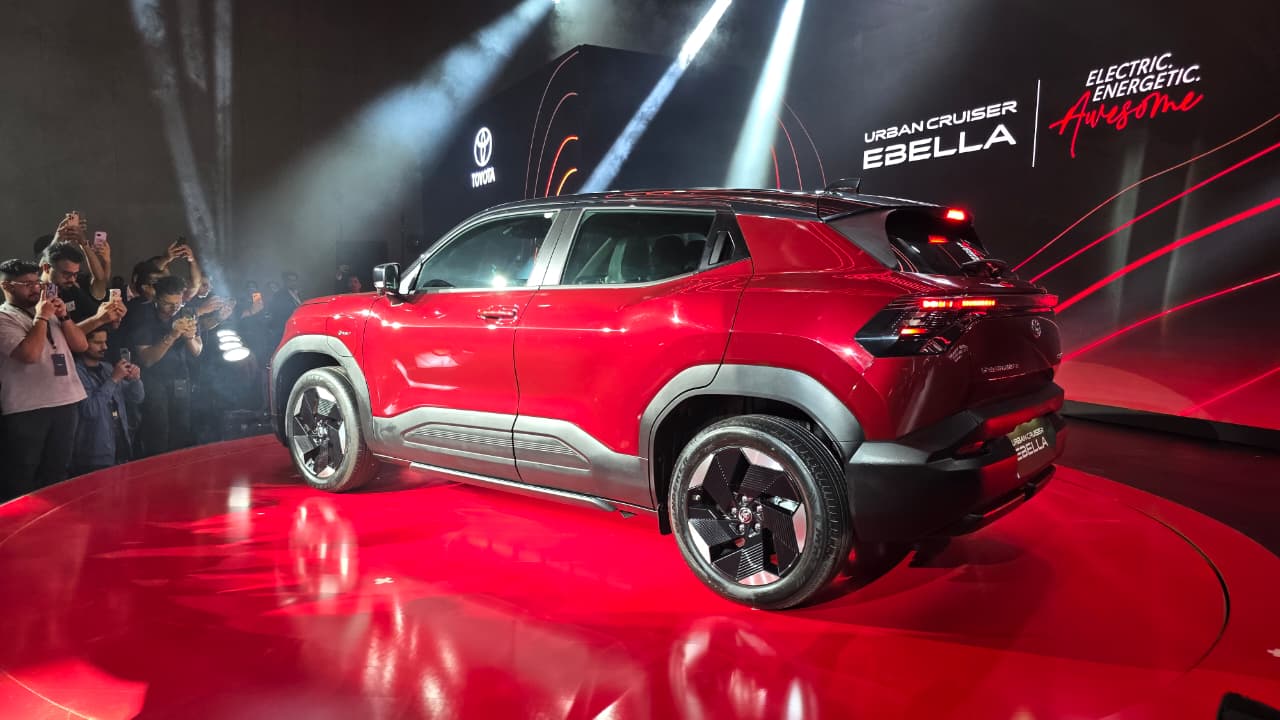
Toyota has finally stepped into the Indian electric vehicle market. Meet the 2026 Toyota Urban Cruiser Ebella, the brand’s first fully electric SUV for India. This is Toyota’s version of the Maruti Suzuki eVitara, but with its own personality, design changes, and features.
So what exactly makes the Ebella different? How much of it stays the same? And most importantly – is this the EV Indian buyers should wait for?
Let’s break everything down in a simple, clean, and logical way.
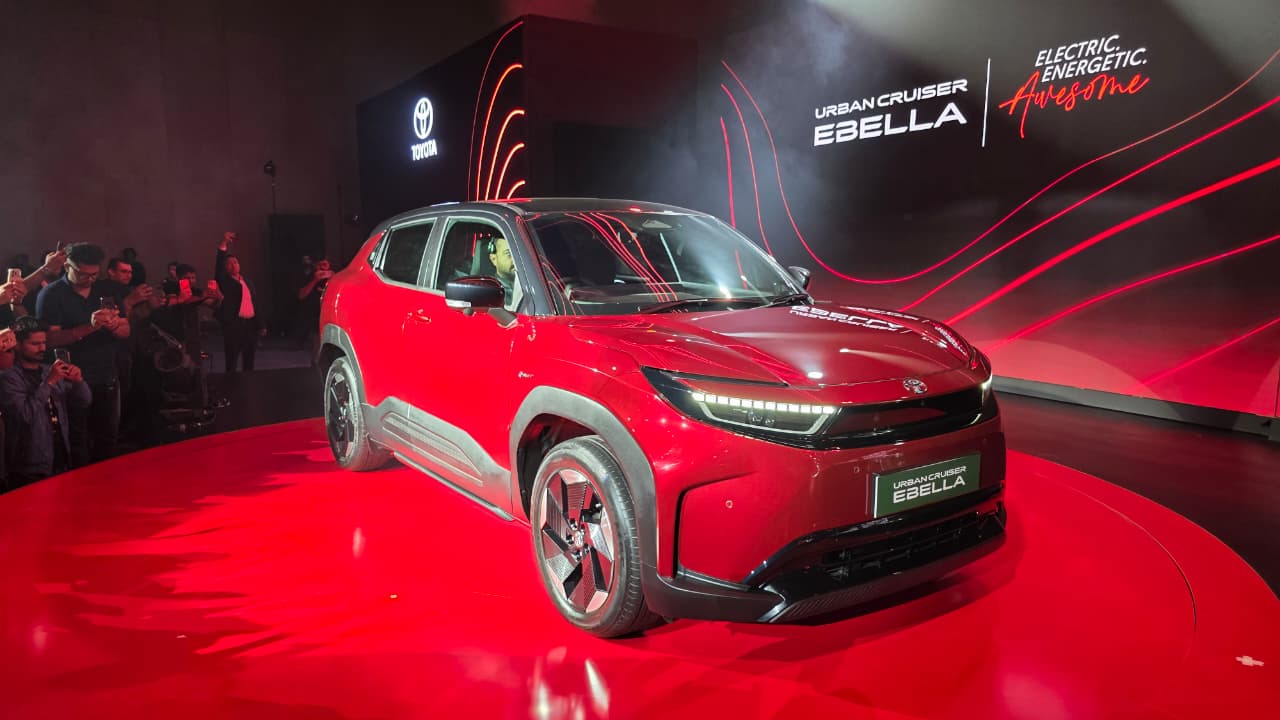
Toyota Urban Cruiser Ebella Design – Fresh and Unique
At first glance, the Toyota Urban Cruiser Ebella looks familiar and seen. But look closer, and you’ll see a number of Toyota-specific changes.
Front Design – Bold Toyota Identity
The biggest difference is visible at the front. Toyota has completely redesigned the face of the Ebella. Unlike the eVitara, which uses split headlights, the Ebella gets a single wide light bar that runs across the front.
- A continuous LED strip connects both headlights
- A dotted DRL pattern gives a modern, premium feel
- A simple bumper design instead of aggressive cuts
- Clean air vents create an air curtain around the tires
- No fog lamps for a more sleek EV-friendly look
Toyota calls this new styling theme the Hammerhead Design. It looks futuristic and also matches the global Toyota design language.
There is also a noticeable gap visible on the bonnet. Don’t worry, it’s not a defect. Toyota has put a rubber strip behind it. This gap only adds character and helps give the Ebella a distinct look.
Overall, the front end looks smoother, more premium and more “Toyota-like”.
Side Profile
From the side, things start to look similar to the Maruti E-Vitara.
Most of the body panels remain the same on the car:
- Same wheel arches and cladding
- Same hidden rear door handles in the C-pillar
- Same overall silhouette
The only real differences here come from the Toyota badging and minor cosmetic changes.
This isn’t a bad thing. The original design already looks sharp and modern. Toyota just adds its branding and keeps the rest practical.
Rear Design – Small Changes, Big Impact
At the rear, Toyota again keeps the basic structure the same but has tweaked the details.
The tail lamps get a new segmented dotted pattern similar to the front DRLs. This gives the Ebella a new identity compared to its Maruti cousin.
The badging also changes:
- “Urban Cruiser”
- “Ebella”
- Toyota logo
These small updates help the car stand out without the need for a major redesign.
Boot space – Compact yet useful
Let’s talk practicality.
What the Toyota Urban Cruiser Ebella offers:
- 238 litres of boot space comes as standard.
- The seats can be expanded to 306 litres by pushing them forward.
By SUV standards, this isn’t huge. In fact, it feels a bit tight. Families with heavy luggage requirements might find it limiting.
But for daily city use, grocery runs and office commutes, the space should be more than adequate.
Interior – Premium, Familiar and Comfortable
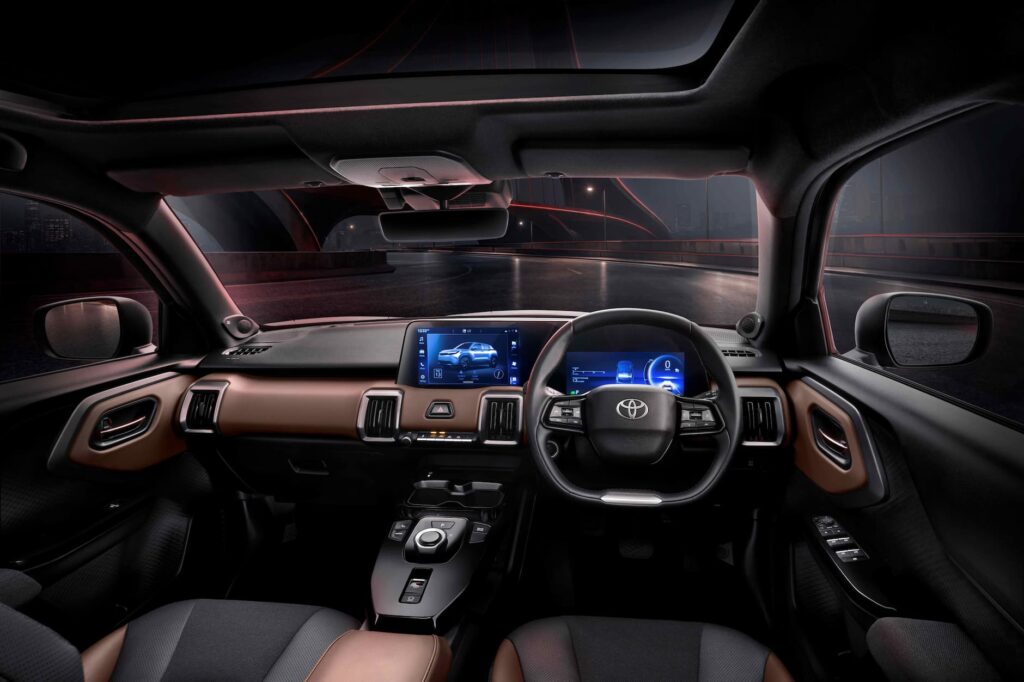
There’s something immediately noticeable when you take a look inside the Ebella. The cabin looks almost identical to the Maruti eVitara.
And honestly, that’s good news.
Dashboard and Layout
Toyota has kept the interior layout simple and modern:
- Single-pane digital display setup
- Familiar steering wheel with Toyota logo
- Clean and easy-to-use controls
- Toyota-specific connectivity software
The screen remains slightly angled, like in the eVitara. Toyota has simply tweaked the branding and interface to suit its ecosystem.
Features
Indian car buyers love features. And Toyota understands that well.
The urban cruiser Ebella comes with these features:
- Sunroof (not panoramic, but still welcome)
- JBL premium sound system
- Ventilated front seats
- Wireless phone charger
- Automatic climate control
- 360-degree camera
- Physical buttons and rotary dials
The presence of proper physical buttons deserves special praise. In a world full of touchscreen-only cars, Toyota keeps things practical.
The controls feel sturdy, well-dampened, and easy to use while driving. This improves safety and user experience.
Rear seat comfort – mixed feelings
The rear seat experience remains the same as the eVitara.
What works well
- Good legroom.
- Sliding rear seats
- Rear AC vents are available.
- Smart folding armrest
- Cleverly designed tilted cup holders are available.
The sliding seat function helps in increasing the boot space when needed. This adds flexibility for different situations.
What could be better
- Limited headroom.
- Slightly knee-deep seating position
- Overall space is not very generous
Tall passengers may struggle a bit, especially on long trips. It is comfortable, but not at all spacious.
Performance and Battery
Toyota has not revealed every technical detail yet. But some key information is already official.
Powertrain Details
- Front-wheel drive layout
- Single electric motor
- 174 horsepower
- 189 Nm torque
Interestingly, the Ebella does not get a front trunk (frunk) because the motor and components take up space under the bonnet.
Battery Options
Toyota offers two battery pack choices:
- 49 kWh battery
- 61 kWh battery
The larger 61 kWh version promises an ARAI-certified range of 543 km on a full charge.
This is a strong number on paper and puts the Ebella in a competitive position in the Indian EV market.
Real-world range may vary, but it still looks impressive.
Charging and Practicality
Toyota has not yet revealed full charging details. However, buyers can expect:
- Fast charging support
- Home charging options
- Standard EV charging compatibility
More specific information should come closer to the launch date.
Warranty and ownership benefits
Toyota plans to make EV ownership stress-free.
The company has already announced:
- 8-year battery warranty
- 60% assured buyback value
- Battery-as-a-Service program (coming later)
These plans serve the purpose of reducing buyers’ concerns about battery life and resale value.
For first-time EV buyers in India, this builds serious confidence.
Price and Bookings – The Big Question
Here’s the part that everyone wants to know.
Official Price – Still Waiting
Toyota is yet to announce the price of the Urban Cruiser Ebella.
Interestingly, both Toyota and Maruti Suzuki seem to be waiting for each other to announce the price first. It almost feels like a friendly game of chess.
Bookings are open
Toyota has started bookings and the booking amount is: ₹25,000.
There is no confirmed delivery timeline yet.
This suggests that the official launch could happen very soon.
Toyota Urban Cruiser Ebella vs Maruti eVitara – Quick Comparison
| Aspect | Toyota Ebella | Maruti eVitara |
|---|---|---|
| Front Design | Completely new | More aggressive |
| Interior | Same layout | Same layout |
| Features | Almost identical | Almost identical |
| Range | Up to 543 km | Similar |
| Brand Feel | Premium Toyota | Maruti Suzuki |