
Electric vehicles are evolving rapidly, but one challenge has always been: charging time. Most EV owners still wait 20 – 40 minutes at a fast charger, which seems slow compared to filling up with petrol in a few minutes.
Now BYD claims to have changed the equation. The company recently unveiled the Blade Battery Pack 2.0 with flash charging, a technology that promises to deliver up to 500 km of range in about five minutes.
Yes, five minutes. That’s about the same time it takes you to fill up at a petrol station.
The announcement has sparked a lot of buzz in the EV industry. But how does this new battery actually work? What improvements does it bring over the first-generation Blade battery? And can it really change the future of electric vehicles?
Let’s put it simply.
The Original Blade Battery That Changed EV Safety
Before we get into the new version, it’s important to understand why the Blade battery became popular in the first place.
BYD introduced the first-generation Blade battery around 2020-2021, and it quickly gained attention in the EV industry. The battery focused on three key strengths:
- High safety
- Long lifespan
- Solid fast charging performance
One of the most talked-about demonstrations was the nail penetration test. Engineers drove a long nail straight through a battery cell. Many lithium-ion batteries would catch fire in such a situation, but the Blade battery did not.
This test highlighted its robust safety design.
The battery also supported relatively fast charging for its time. It could charge from 10% to 80% in about 30 minutes, which equates to a charging rate of about 1.8C to 2C.
Because of these advantages, the Blade battery not only became popular in BYD vehicles but also attracted interest in the entire EV sector.
According to the International Energy Agency, battery safety and charging speed are the two biggest factors affecting EV adoption worldwide. BYD’s first Blade battery has already addressed both issues. However, the company had bigger plans.
Why Blade Battery 2.0 took six years
BYD has taken nearly six years to launch the second-generation Blade battery. The delay was intentional.
Engineers needed time to solve a major engineering problem known as the “impossible triangle” in the electric vehicle industry.
This concept explains the difficult balance between three factors:
- Large battery capacity
- Ultra-fast charging
- Affordable cost and manageable heat
Usually, improving two of these factors harms the third.
For example:
- A larger battery increases vehicle weight and charging time.
- A smaller battery charges faster but reduces driving range.
- Large battery + fast charging often leads to higher cost and severe heat generation.
Most EV manufacturers compromise somewhere in this triangle.
BYD claims that its Blade Battery 2.0 breaks this limitation by simultaneously improving battery chemistry, thermal management, and charging architecture.
The First Vehicle Using Blade Battery 2.0
BYD introduced the new battery alongside the Denza G9 GT.
The car showcases the full potential of the new battery pack.
Key performance figures include:
- Certified range: 1036 km (CLTC cycle)
- Real-world estimate: around 800 km
- Charging speed:
- 10% to 70% in 5 minutes
- 10% to 97% in 9 minutes
To put this into perspective, an EV can gain hundreds of kilometers of range during a short coffee stop.
Energy density has also improved slightly, increasing by about 5%, which helps extend driving range without increasing battery size.
Less battery degradation over time
Battery health plays a critical role in EV ownership. Most lithium-ion batteries gradually lose capacity over years of use.
BYD claims that the second-generation Blade battery has also improved in this area.
According to the company:
- A first-generation Blade battery can lose about 12% of its capacity after eight years.
- Blade Battery 2.0 reduces that degradation to about 9-10% over the same period.
This improvement comes despite supporting much faster charging speeds, which typically accelerate battery wear.
Simply put, the new battery charges faster without sacrificing long-term durability.
What Changed Inside the Battery Cells?
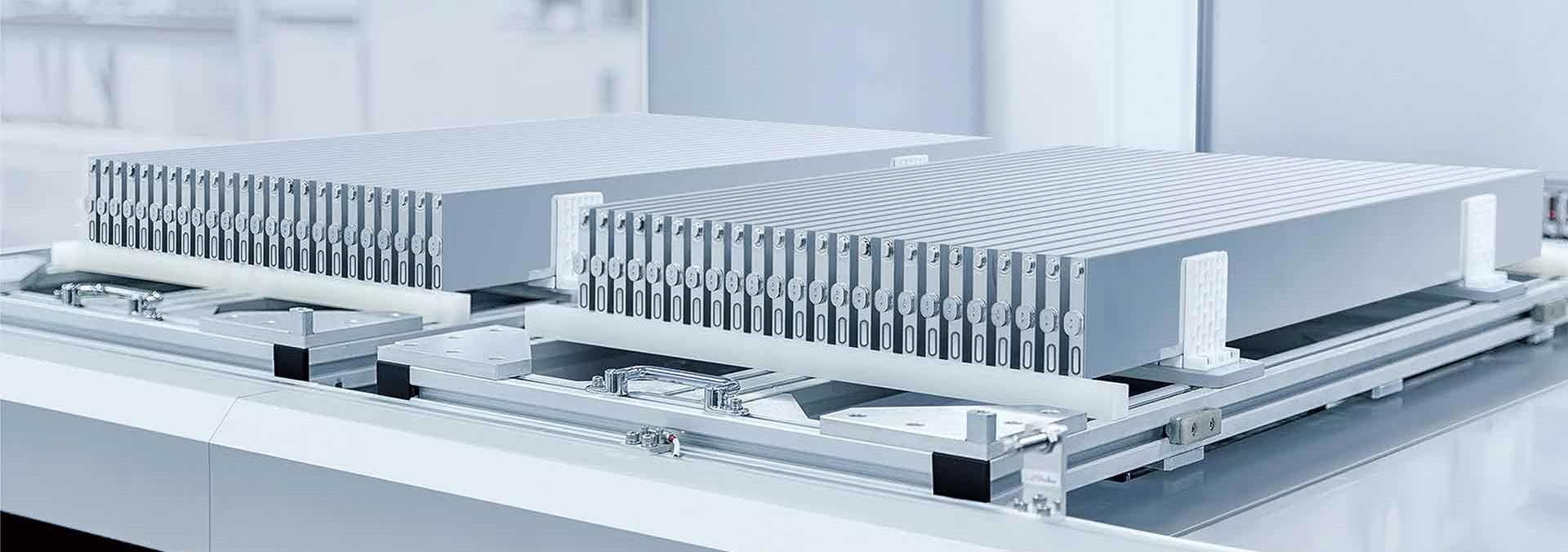
The real innovation lies inside the battery cell itself.
A standard lithium-ion battery cell contains three core components:
- Anode
- Cathode
- Electrolyte
Energy is transferred when lithium ions move between the anode and cathode through the electrolyte.
BYD engineers have redesigned all three elements.
Using AI-assisted material optimization, the company created a high-speed channel for lithium ions within the electrolyte. This new pathway allows the ions to travel five times faster than before.
The faster ion speed directly translates into ultra-fast charging capabilities.
Because charging speed depends on how quickly the ions move through the battery, this improvement dramatically increases performance.
AI-powered thermal management system
Fast charging generates heat. Excessive heat can damage the battery and even cause dangerous failures.
To control this problem, BYD has introduced a full-spectrum intelligent thermal management system. This system monitors and adjusts the temperature in the battery pack in real time.
Key functions include:
- Individual cell temperature monitoring
- AI-controlled cooling adjustments
- Dynamic response based on charging speed
When the battery is charged quickly, the cooling system automatically increases its efficiency. Each cell receives precise thermal regulation.
This innovation has helped increase the charging capacity from approximately 2C in the original battery to approximately 10C in the new system, showing a massive improvement in jump charging speed.
Cold Weather Performance Improvements
Lithium-ion batteries often struggle in extremely cold temperatures.
At –10°C to –30°C, most EV batteries experience:
- Reduced charging speed
- Significant range loss (sometimes 20 – 40%)
BYD tested its new battery under these conditions.
In one experiment, engineers left a vehicle outside for 24 hours at -20°C. After that exposure, the car charged from 10% to 97% in about 12 minutes.
At normal temperatures, the same charge takes about 9 minutes.
A three-minute difference in extreme cold shows a strong performance result.
The company repeated the test at -30°C and with the same charging time in nine different vehicles.
This suggests that the system can work reliably even in extremely cold environments, such as parts of Europe or Russia.
Extreme Safety Testing
Battery safety is one of the biggest concerns for EV buyers.
China has some of the world’s strictest EV battery safety regulations, and BYD designed the Blade Battery 2.0 to exceed those standards.
Thermal Runaway Test
Engineers intentionally short-circuited four cells inside a battery pack that had already completed 500 charging cycles.
During the test:
- One cell reached a temperature of over 600°C
- The heating layer reached over 700°C
Despite such extreme conditions, the battery did not catch fire or emit smoke.
Bottom Impact Test
Road debris or rocks can hit the underside of an EV, which can damage the battery pack.
According to Chinese safety standards, batteries can survive a 150 joule impact from a 30mm object.
BYD took the test a step further:
- 300 joules : No damage
- 1000 joules : Still no failure
- 1500 joules : A hole was made in the pack
Despite being ten times the standard impact force, the battery did not burn or emit smoke.
Nail penetration while charging
The company repeated its famous nail penetration test under even harsher conditions.
This time:
- The battery remained connected to 1500 kW charging
- Engineers drove a nail into the pack.
The battery still didn’t catch fire and remained stable after two hours.
These results show why Blade batteries often earn a reputation as one of the safest EV batteries currently available.
BYD’s new 2000 kW flash charging system
A battery alone cannot provide ultra-fast charging. It also requires an extremely powerful charging infrastructure.
BYD has introduced the second generation of its flash charger, designed specifically for the Blade Battery 2.0.
Key specifications include:
- Maximum station capacity: 2000 kW (2 megawatts)
- Single charging gun: up to 1500 kW
- Dual charging guns: 1000 kW each
For comparison, the Tesla V4 Supercharger supports around 500 kW.
BYD’s system can deliver three times more power.
Smart Energy Infrastructure Behind the Chargers
Handling megawatt-level charging requires intelligent energy management.
According to Wang Chuanfu, the company has designed a hybrid energy system for these charging stations.
Each site can include:
- Solar panels on top
- Energy storage systems
- Grid connection
If vehicles require less than 1 megawatt of electricity, the station can draw power directly from the grid, and for more charging power, the station uses energy stored from on-site battery systems, this approach reduces grid stress and enables extremely high charging speeds.
Charger design inspired by petrol stations
BYD has also redesigned the physical charging station.
The new charger uses a T-shaped design that improves cable speed and accessibility.
The company designed the experience to mimic a petrol pump:
- The car arrives.
- The driver plugs in.
- Charging takes a few minutes.
- The vehicle drives off.
Most drivers only need a quick top-up, not a full charge. BYD optimized the system with this real-world behavior in mind.
According to the company, the system can add about 2 km of driving range every second.
That’s roughly 120 km of range per minute.
Rapid expansion of charging infrastructure
At launch, BYD already had 4,239 flash chargers in operation.
The company plans to dramatically expand this network.
BYD announced a target of 20,000 flash charging stations by the end of the year, with plans to export the technology globally.
This expansion could play a key role in making ultra-fast EV charging more accessible.
The Big Vision Behind the Technology
The concept behind BYD’s charging ecosystem is nearly two decades old.
In 2006, Wang Chuanfu introduced a strategy called “Three Green Dreams.”
The idea focused on integrating:
- Solar energy
- Energy storage
- Electric vehicle charging
Today, BYD’s flash charging stations combine all three elements.
Solar panels generate power, energy storage systems store it, and flash chargers deliver it to EVs in minutes.
Nearly 20 years later, the company appears to be making that vision a reality.
What does this mean for the future of electric vehicles
Many people wonder if such high charging power will soon reach countries like India.
Currently, most public chargers in India operate at well below 500 kW, however, the technology usually spreads slowly.
If 1500 kW charging already exists in China, it is reasonable to expect 500 kW charging infrastructure to appear in other markets over time.
Innovation follows this pattern: once the extreme version comes into existence, the mid-range version becomes the new standard.
Source : BYD Blade Battery 2.0, Youtube