Have you ever noticed this? You go to a car showroom planning to buy the base variant, but somehow you walk out after booking the more expensive version. This doesn’t happen by accident. Car brands and dealerships follow well-planned strategies to quietly push buyers towards higher variants.
In India, which is a very price-sensitive market, about 40% of car sales there come from the top-end variants. That alone tells us how effective these tactics are. Let’s see how brands influence your decisions, and more importantly, how you can avoid falling into the trap.
Car brands upselling tricks
- Affordability Trick
- VFM Trick
- Waiting period
- Special Edition
- Cross model stratergy
- Dealer Add-ons
Affordability Trick
I would like to call the first tactic “the affordability tactic.” In sales, there is a term called “conversion.” In simple terms, it means converting a random inquiry into an actual purchase. And people working in sales and marketing have done everything for this conversion. But before conversion, they need to generate leads. In terms of the automotive market, brands first need to develop your interest in their cars. Brands primarily want that if a customer goes to buy a car, they visit their showroom first. And for this, the strongest weapon that brands have is the base variant of their car. Brands keep the prices of their base variants very low. So low, in fact, that people automatically start getting interested in the car. At car launch events, car brands reduce the prices of the vehicles and show you an unexpectedly low price, saying “This car starts at such a low amount.” And you immediately get excited after seeing the price, thinking, “Wow, such a big car is available at such a low price!” But this price is often just an introductory price, meaning it is likely to increase later. But even if the price is not introductory and does not increase later, we see that the prices of the base variants of some cars are set very aggressively. For example, if I talk about the Scorpio N, this powerful vehicle starts at an ex-showroom price of just ₹13.2 lakh. This makes many people interested in buying this car. And given this aggressive price, it seems that the brand itself wants its base variant to be sold in large numbers. But we are completely wrong here. In fact, brands do not want us to buy their base variants at all. I will give you an example of this using the base variant of the Scorpio N. In the base variant of this car, you don’t get central locking, and you have to open, close and adjust the ORVMs manually. The base variant of the Kia Sonet doesn’t even get a basic music system, and in many cars, you don’t even get all four power windows. This means that essential features are left out in the base variant, leaving the car incomplete. These features can easily be added if the price of the base variant is increased by just ₹20,000 to ₹30,000. But brands don’t do this because they don’t want to sell you the base variant. And they don’t want to sell you the base variant because their profit margin is very low on it. The profit margin on the base variant is extremely meager.
Well, now you see that even the base variant of the car doesn’t have basic features. So you decide that you will install some things in the aftermarket. So now, the problem with aftermarket add-ons is that the quality of the features you get is not that good, and the overall compatibility with the OEM car is also not very good. And there have been many cases where cars have caught fire due to poor installation or poor quality of aftermarket accessories, and insurance companies have refused to pay because the work on the car was done from outside sources. So, due to this fear, most people avoid buying the base variant. This proves that car brands don’t really want to sell you the base variant. This is just a honey trap that they use to get you to at least visit the showroom, and once you get there, the lead conversion process begins. Now, see, the base variant doesn’t make sense for you because it is missing a lot of features. So, you think, “Okay, let’s go for another base variant.” But there are other tactics that brands use, which I would call the value-for-money tactic.
VFM Trick
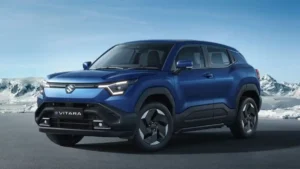
What brands do is that they price the second-to-base variant significantly higher than the base variant. Not all of them do this, but most brands do. For example, the ex-showroom price difference between the Grand Vitara Sigma and Delta base variants is ₹1,33,000. The price difference between the Creta’s base model E and EX is ₹1,17,000. But as you go from the second-to-base variant to the third-to-base variant and onwards, you will see the price difference come down to around ₹30,000 to ₹40,000. Then, as you go down from the third base variant, you will see a reduction in price. This means that brands make every effort to ensure that when you compare the prices of the base, second base and third base variants, you automatically feel that the higher variant offers better value for money. This variant ladder strategy of brands also proves to be very successful, and with its help, brands can easily upsell you. And Honda is doing this very efficiently with its variants of the Elevate, as 53% of their total sales of the Elevate come from the top-end ZX variant. And that is why you will see car brands releasing so many variants for each of their cars. For example, the Nexon has 97 variants. All I know is that Talking about the ICE model. Creta has more than 30 variants available, and Scorpio has more than 40 variants. Now, the ladder of these variants, the waiting period also plays a big role in taking you up the ladder. We often hear from people that lower-end variants are not available at dealerships. Dealers say that the demand for these is high, due to which the variants are not available, and the waiting period will be long. But my guess is that brands deliberately keep the production of these variants low. And sometimes, dealers even lie that the car is not available when it is actually available. And again, the reason behind this is the same: profit. If a dealership sells you higher variants of the same car, they make more profit on the higher variants. The reason for this is that in India, dealers get a profit margin of only 2 to 6% on the ex-showroom price. So, suppose the base variant of a car is priced at ₹10 lakh, and the dealer gets 5% profit, then the dealer will earn ₹50,000 on that car. But if the top variant of the same car is priced at ₹20 lakh, then the profit directly increases to ₹1 lakh. Now, to ensure that more profit is made, the dealership also shares a part of the earnings with their sales team. This means that if a salesperson sells more variants, their commission increases. For example, suppose a salesperson gets an incentive of ₹1000 for selling the base variant. However, for selling more variants, this incentive increases to ₹5000. This means that their incentive increases five to six times. And that is why you will often see salespeople suggesting buying the higher variant, as their profit is also linked to it.
Waiting period
Car brands also try to upsell you cars by using cross-model strategies. And this is how it happens: Car brands keep the prices of different variants of their different models very close. Because of this, dealers often sell you the lower variants of larger cars instead of the higher variants of the same car.
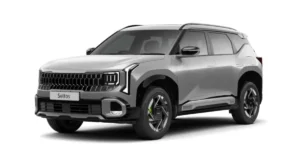
Let us take the example of Kia cars here, specifically the Cyros and Seltos. Suppose you decide to buy a Cyros. Although very few people are thinking of buying a Cyros these days, suppose you go to buy the mid-range variant of the Cyros, but there is a Seltos parked right next to it. The dealer says, “Sir, take a look at the Seltos, it is a big car with a powerful engine.” But you think, “That will be expensive.” Then the dealer says, “No, you will get the base variant of the Seltos for the same price as the mid-variant of the Cyros.” Because both these variants of both the cars are priced around ₹10.7 lakh. And when you focus on the Seltos, you have to buy one or two higher variants because the base variant does not have many features. So, you went to buy the mid-variant of the small car and then bought the mid-variant of the big car and brought it.
Special Edition, Cross model stratergy and Dealer Add-ons
Another way to attract customers is through special editions. For example, Tata has introduced a dark edition and a Kaziranga edition of its SUVs. Similarly, Mahindra recently launched a Batman edition of its B6 and recently introduced a Formula E edition. As soon as you hear the words “special edition”, you think you are getting something ultra-premium and ultra-exclusive. Yes, this is what happens with supercars. Whether it is a Lamborghini Aventador SV, a Pagani or a Porsche, you see engineering changes and significant announcements. But in mass-market cars, these changes are more or less cosmetic, whether they are done on the interior or the exterior. And these are usually offered in cars that sell a little less. That is why you often see more special editions in EVs. This also happens with ICE cars that sell less. If you are already planning to buy a more expensive variant, there is no problem in buying a special edition car. But as I said before, almost all the changes are cosmetic. When the car manufacturer successfully convinces you that this is the right car for you, the game is not over yet.
That was just the first part. The second part starts at the dealer level add-ons. The dealer tries to sell you premium accessories, extended warranties, insurance that you can only buy from them, coatings, treatments, polishing, packages and who knows what else. And these add-ons are presented so simply that you think they are really necessary. They say that buying insurance from them is mandatory, otherwise the claim will not be processed, or the maintenance packages are presented as future savings. Dealers do this because the profit margin on the sale of a car is only 3 to 6%, as I mentioned before. However, the margins on accessories are often over 100%, and the profit on insurance can be over 50%. So, overall, the point is that car manufacturers try to upsell you through their marketing, variant pricing, and cross-model strategies, and then dealers also try to line their pockets with more money. Now, this is not a scam. Selling something is not a scam in any way. Because they give you something valuable for your money. Yes, the only thing is that you pay more for it. But the truth is, you usually don’t need them.
So, let’s come to the main question: what should you do? How can you avoid this upselling? Look, there’s only one thing you need to do, and that is to completely ignore the base variant. No matter how aggressively a company prices its cars, if you know that the base variant lacks even the essential features, don’t even go to the showroom with the mindset of buying the base variant. Either increase your budget a little, or consider a car from a lower segment. If your budget is 11 lakhs, instead of buying the base variant of a mid-size SUV, consider a lower-mid variant of a sub-4 metre SUV. Or, if you are planning to buy a car like the Scorpio N with a budget of 16 lakhs, consider taking the mid-variant of a mid-size SUV. In other words, make a wise decision. Don’t fall for brand marketing and hype. And avoid upselling tactics of dealers.