Adventure motorcycles promise freedom, but few actually deliver when the road disappears. The new KTM 390 Adventure R attempts to do just that. I rode the bike for three days at the first KTM Adventure Rally held in India, and the experience gave a clear idea of what this motorcycle can and cannot do.
This was no short test ride. The rally involved high-speed trails, rocky climbs, water crossings and technical sections. That means this review comes from real off-road riding, not just city commuting.
Let’s break everything down properly and get to the nitty-gritty.
First Experience at KTM Adventure Rally India
The rally itself was a big part of the experience. The riders spent three days learning, riding, crashing and honing their skills. One of the highlights was riding with Chris Birch, who guided the riders through the difficult terrain and gave practical tips after each obstacle.
KTM India also provided experienced trainers who helped the riders understand the proper off-road techniques. The level of difficulty of the rally felt moderate to high. New adventure riders may struggle here, so it makes more sense to start with smaller KTM training events before joining a full adventure rally.
For the entire rally, I rode the 390 Adventure R, and each day felt different depending on the terrain and speed.
What Is KTM 390 Adventure R?
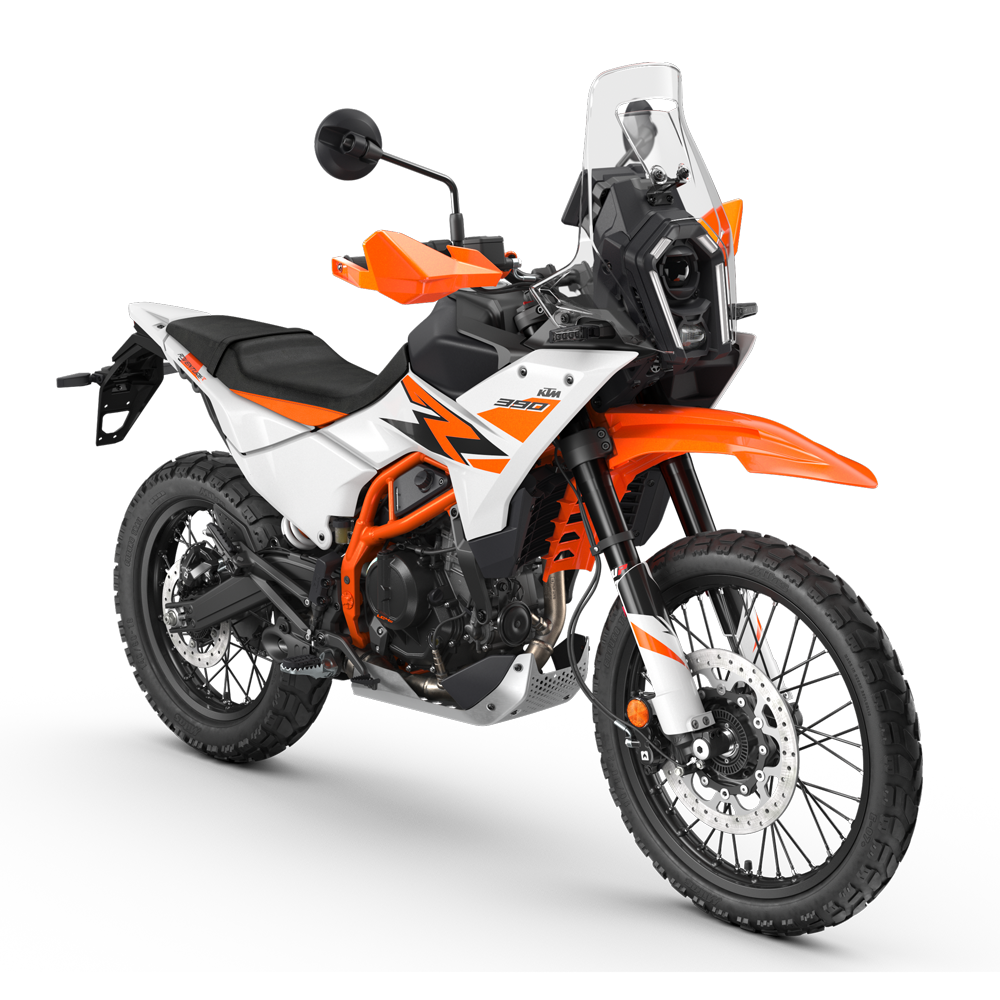
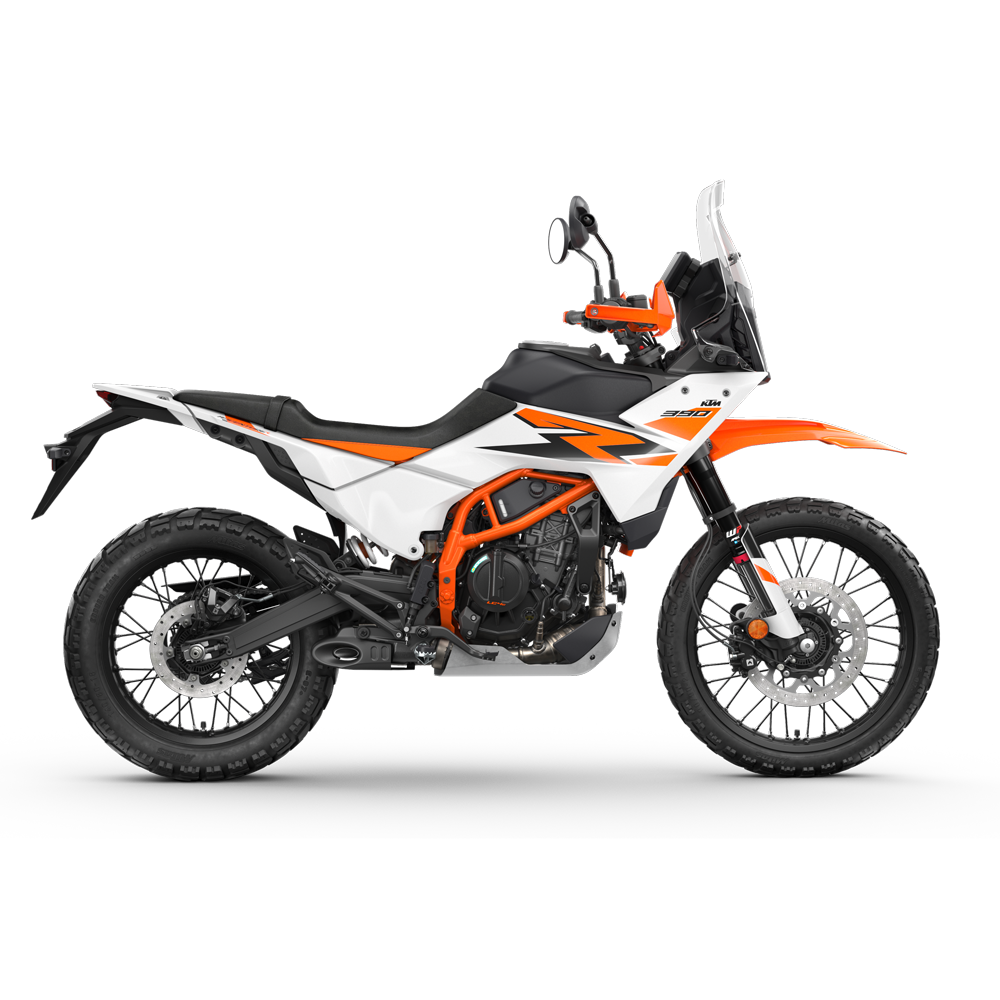
The Adventure R is the most off-road focused version of the 390 platform.
Key differences compared to the standard Adventure include:
- 21-inch front wheel and 18-inch rear wheel
- Longer suspension travel
- Higher ground clearance
- Off-road focused suspension tuning
- Taller seat height
Unlike the Adventure S, which feels more road-friendly, the Adventure R focuses on proper dirt riding. The suspension feels firmer and more controlled, especially at speed.
This change alone makes the bike feel more serious.
Seat Height and Riding Position
The Adventure R has a seat height of around 880 mm, making it a tall motorcycle.
For taller riders, the height feels natural. Shorter riders will need practice and technique. During the rally, some riders who were not very tall still handled the bike well, proving that skill is more important than height.
When seated, the riding position feels similar to the regular 390 Adventure. The seat-to-footpeg distance feels a bit tight after a long ride, but overall it provides comfort for on-road use. Standing off-road feels decent, but not perfect.
Two things stand out:
- The handlebar feels slightly low
- Grip between knees and tank could be better
Some riders prefer handlebar risers, but experienced riders often recommend adjusting footpeg position instead. This improves control without changing steering feel.
Suspension and chassis performance of the 390 Adventure R
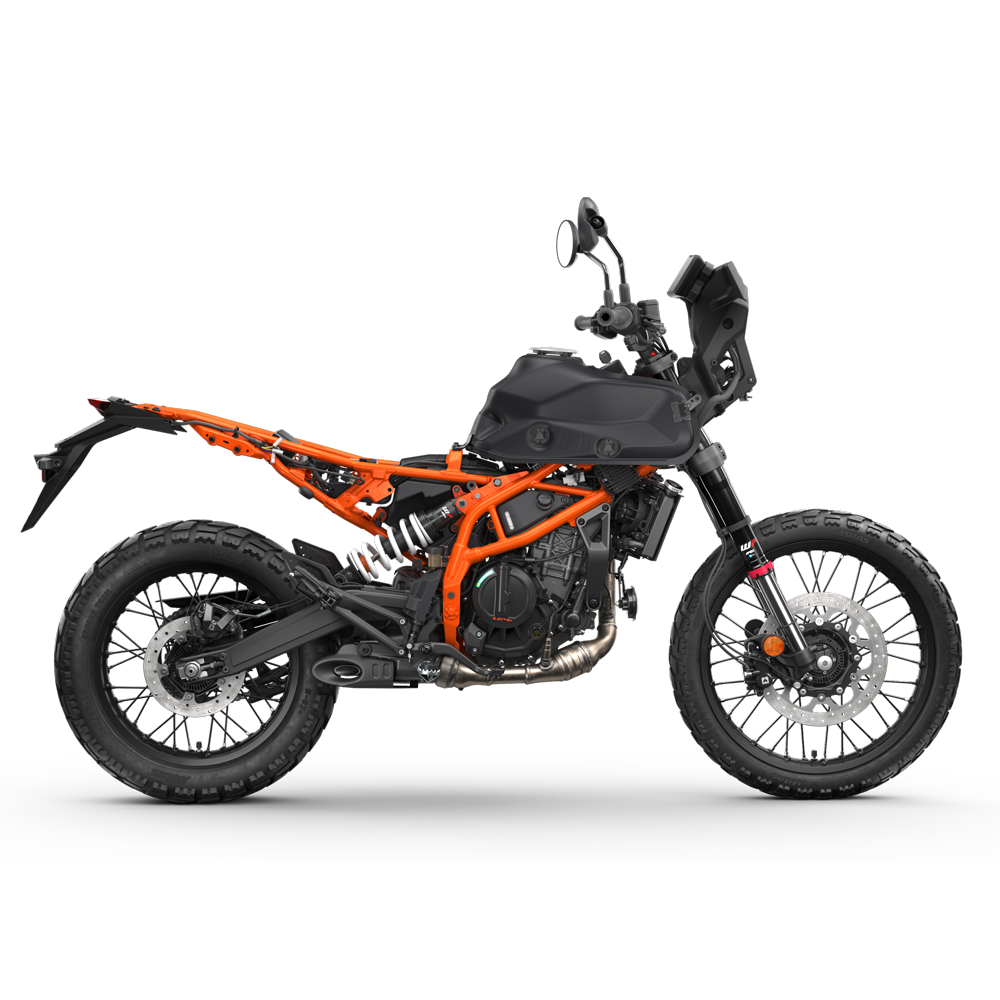
This is where the 390 Adventure R becomes special.
On the first day, the rally consisted of high-speed rocky roads where the speed touched 90-100 km/h. The suspension remained stable and controlled. The bike never panicked. That stability comes from both the suspension and the chassis.
Even when hitting bumps at speed, the motorcycle maintains its composure. This shows the strong frame design, not just good suspension.
The later sections include:
- Slow climbs
- Loose gravel
- Rock steps
- Deep potholes
In these conditions, the suspension felt smooth and responsive.
You can adjust the compression and rebound damping. Small changes make a big difference, especially during high-speed riding and technical sections. The bike always responds exactly as expected.
Engine Performance and Gearing
The engine feels familiar but has also been slightly improved.
Earlier versions of the 390 sometimes stalled at low speeds. Here, that problem seems to be reduced. During the rally, the engine behaved better in slow technical riding, and the gearing works well for both highway and trails. However, the engine still has one weakness.
Low-end torque feels limited. The power comes alive above 6,000 RPM. This means you have to manage the off-road throttle carefully.
The electronics help here.
You can customize the off-road mode by adjusting:
- Throttle response
- Traction control
- ABS settings
With the right setup, the bike adapts easily to different terrains.
Tires make a big difference
The bike uses Mitas Enduro Trail Plus tires, and they have impressed me greatly.
These tires worked well in:
- Mud
- Rocks
- Water crossings
- Fast roads
- Highway riding
Lower pressures provided excellent grip off-road. Higher pressures improved stability on the road.
Even at lower pressures, the bike never felt unstable on asphalt.
For this price range, these tires feel surprisingly capable.
Water crossing and exhaust concerns
Many riders were concerned about the low-mounted exhaust.
During the rally, the bike went through deep water crossings. Some motorcycles even fell into the water.
No serious problems were observed.
As long as the engine shuts off quickly after a fall, the exhaust does not pose a problem. In real riding conditions, the design seems safe enough.
What I did not like
No motorcycle is perfect. And this motorcycle also has problems, the biggest problem for me is the windscreen.
It feels too high for an off-road bike. When riding aggressively, the screen comes very close to the helmet. In the fall, this can cause damage.
The screen also blocks the airflow in hot weather. Riders in cold countries will like this, but in the Indian heat, more airflow feels better. A smaller windscreen would suit this bike.
Another problem is the plastic buzzing, after heavy off-road riding, small vibrations started. Nothing broke, but some bolts needed tightening. This is not uncommon for hard off-road use, but buyers should be aware that this can happen.
Engine Vibration on Highway
The engine doesn’t feel very smooth. Around 5,000 – 5,500 RPM, the vibration in the handlebars and footpegs becomes noticeable. But at high speeds, it improves again.
During off-road riding, this isn’t too bothersome. On daily commutes, you’ll notice it more.
So your opinion will depend on how you plan to use the bike.
Practicality and Luggage Options
The bike feels tough and sturdy. During the rally, several riders dropped their bikes. The protection parts worked well, and most bikes continued riding without damage.
However, luggage mounting options seem limited. Riders traveling long distances may need aftermarket racks.
This is not a touring-focused design. It’s built for performance first.
Tubed wheels vs. tubeless
The KTM Adventure R uses tube-type tires.
This has both advantages and disadvantages.
Road riders prefer tubeless for easy puncture repairs.
Off-road riders prefer tubes because damaged rims can still hold air.
So the choice depends on the riding style.
KTM Adventure R price in India
The KTM Adventure R is priced at around ₹3.8 lakh ex-showroom, which makes it expensive but still reasonable for the hardware on offer.
Considering the suspension, electronics and off-road capability, the price seems reasonable.
There is nothing else in India that offers this level of off-road performance at this price.
KTM 390 Adventure R Engine Specifications
| Specification | Details |
|---|---|
| Engine Type | 1-cylinder, 4-stroke engine |
| Displacement | 398.7 cm³ |
| Power | 45 PS |
| Torque | 39 Nm |
| Transmission | 6-speed |
| Cooling | Liquid cooled |
| Engine Cylinder | Single cylinder |
| Engine Management | Bosch EMS with RBW |
| Engine Oil | Motorex Formula 4T 15W/50 |
| Engine Stroke | 4-Stroke |
| CO₂ Emissions | 79 g/km |
KTM 390 Adventure R Chassis Specifications
| Specification | Details |
|---|---|
| Frame | Steel trellis frame, powder coated |
| Rear Subframe | Bolt-on steel trellis frame |
| Chain | 520 X-Ring |
| Steering Head Angle | 62.9° |
| Trail | 110 mm |
| Wheelbase | 1481 mm |
KTM 390 Adventure R Brake Specifications
| Specification | Details |
|---|---|
| Front Brake | Bybre axial floating caliper, 2 pistons |
| Rear Brake | Bybre floating caliper, 1 piston |
| Front Disc Diameter | 320 mm |
| Rear Disc Diameter | 240 mm |
KTM 390 Adventure R Suspension Specifications
| Specification | Details |
|---|---|
| Front Suspension | WP APEX open cartridge 43 mm |
| Rear Suspension | WP APEX split piston |
| Front Travel | 230 mm |
| Rear Travel | 230 mm |
| Front Adjustment | Compression & rebound adjustable (30 clicks) |
| Rear Adjustment | Preload with top ring + rebound (20 clicks) |
KTM 390 Adventure R Dimensions & Weight
| Specification | Details |
|---|---|
| Seat Height | 870 mm |
| Ground Clearance | 272 mm |
| Fuel Tank Capacity | 14 litres (approx.) |
| Weight (without fuel) | 165 kg |
| Weight (fully fueled) | 176 kg |
KTM 390 Adventure R Wheels & Tyres
| Specification | Details |
|---|---|
| Front Wheel Diameter | 21 inch |
| Rear Wheel Diameter | 18 inch |
| Front Rim Width | 1.85 inch |
| Rear Rim Width | 2.5 inch |
| Wheel Size | 1.85 x 21 / 2.5 x 18 |
Comparison with Himalayan
Many riders will compare this to the Royal Enfield Himalayan.
The Himalayan feels more comfortable and relaxed.
The 390 Adventure R feels sharper, faster and more capable on the road.
If comfort is more important → Himalayan
If performance is more important → Adventure R
Both cater to different riders.
Final Verdict – Which is the best off-road ADV in India?
After three days of hard riding, one thing is clear.
The KTM 390 Adventure R is not for everyone.
It’s tall, it vibrates and it’s focused.
But if you want a real off-road adventure motorcycle made in India, this is the closest thing you can get right now.
It handles speed, rocks, mud, climbs and technical trails without drama.
For serious adventure riders, this is one of the most capable ADV bikes available in India today.