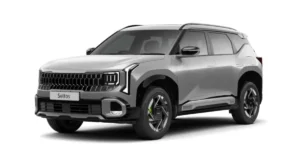

Renault has finally brought back the Duster, the name that ruled Indian roads. And this time, Renault claims that it is back stronger, smarter and more premium than ever before. Naturally, expectations are sky-high.
So, does the new Renault Duster live up to its legacy, or is it just old memories with fancy tech? Let’s break it down section by section, using real details, clear logic and no marketing fluff.
New Renault Duster Exterior Design
At first glance, the new 2026 Duster looks decidedly bold. Rather than making it look like a soft urban crossover, Renault has leaned towards a more robust SUV identity.
Front Design Highlights
The front immediately grabs attention with the large “DUSTER” badging, which is similar to Renault’s new design direction seen on global models. It looks bold without being overly flashy.
You get:
- LED daytime running lights
- Full LED headlamps
- The 360-degree camera is neatly placed above
An interesting detail here is the fog lamp placement. Instead of the usual spot, Renault has pushed them down, almost underground. It looks unconventional, but it works visually.
Another unique feature is that the front gets six parking sensors, three on each side. That’s more than most SUVs offer and will definitely help in the tight Indian parking conditions.
Renault has also added a small lining near the front camera to prevent moisture accumulation. It’s a small detail, but it does focus on real-world use.
Side profile: Classic Duster DNA

From the side, the SUV sticks to the original Duster shape. Renault hasn’t experimented much here, and honestly, that’s a good thing.
Key elements include:
- 18-inch alloy wheels
- Strong shoulder lines
- The familiar boxy stance
The Duster’s ground clearance is 212 mm, which is great for Indian roads and light off-roading. Speed bumps, potholes, broken village roads are fine, so no one will complain about the Duster.
Body cladding and practical reality
The matte black cladding enhances the SUV’s looks, but there’s a catch. Over time, the matte plastic fades. Many owners use oils or quick fixes, but they rarely last.
If you plan to take the Duster off-road frequently, using a dedicated plastic and rubber restorer makes more sense. It keeps the cladding looking fresh and avoids that dull grey look.
Mirrors, handles and roof: functional choices
Renault eschews flush door handles, thankfully. Traditional handles are easier to use, especially in dusty or muddy conditions.
Other details include:
- Glossy ORVMs (fingerprints show up easily)
- A camera mounted under the mirror
- Blind spot warning indicator
- Chunky roof rails
- Panoramic sunroof
The roof rails add visual height, while the sunroof extends to the rear seats, which rear passengers will appreciate.
Rear design: Modern and clean

The rear looks quite modern and also matches Renault’s latest design language well.
At the back you get:
- Connected LED tail lamps
- Subtle Duster badging
- Six rear parking sensors
- Electric tailgate
One concern is the heavy use of glossy black. In Indian conditions, dust and mud will show up quickly. Also, the mix of matte and gloss finishes can look uneven after a few weeks of real-world driving.
Boot Space: One of the largest in this segment
Renault claims the largest boot in this category, offering 700 litres of space up to the roof. On paper, it is very spacious.
The loading area looks really big, making it ideal for:
- Long road trips
- Airport runs
- Family trips with luggage
However, there is one major drawback, there is no spare tyre. Renault has only provided a puncture repair kit. For Indian highways, it is not ideal. Hopefully, the higher variants or the hybrid version will address this.
Duster Rear Seat Comfort
The Duster feels reasonably spacious once you enter the second row.
Space and Seating
- Knee room: Decent
- Thigh support: Acceptable, could be better
- Headroom: Enough for a 6-foot passenger
- Width: Comfortable for three adults
Renault deserves credit for providing not two, but three adjustable headrests. It’s a small feature that improves safety and comfort.
The leather upholstery feels durable rather than premium, which suits the Duster’s rugged personality.
Rear Amenities
Rear passengers get:
- AC vents
- Two Type-C charging ports
- Door storage
- Center armrest with cup holders
A panoramic sunroof that extends all the way to the rear makes the cabin feel airy.
The only problem is the high central tunnel. For a front-wheel-drive SUV, it slightly affects the comfort of the middle passenger. A child will sit comfortably, but adults may struggle on long drives.
Front Cabin
The front cabin doesn’t try too hard to impress, and that works in its favor.
The materials used are mostly hard plastics, but the fit and finish feel solid. Soft-touch materials appear in select areas, and carbon-fiber style trim adds some visual interest.
Renault has added yellow accents throughout the cabin, giving it a youthful and slightly adventurous vibe.
Steering wheel and driver controls
The steering wheel feels decent in the hand, though not of luxury-grade quality.
Features include:
- Height and reach adjustment
- Pedal shifters
- Separate dash and audio controls
- Clear button layout
The digital instrument cluster offers good brightness and readability, even in daylight.
Information and Technology
The touchscreen system feels modern and intuitive.
Highlights:
- 360-degree camera
- Google Assistant built-in
- Google Play Store
- Amazon Music and apps support
You’ll need to connect your phone hotspot for full functionality, but once connected, the system feels smooth.
The camera quality is good, not class-leading, but usable.

Seats, comfort and storage
The front seats offer:
- Leather upholstery
- Ventilation
- Electric adjustment
- Lubric support available for both front occupants
The glovebox may seem oddly shaped, initially shallow, then suddenly deep. This layout is common in Renault cars, although it still feels unusual.
The door pockets and cabin storage are well thought out, making daily use easy.
Engine Options & Gearboxes: Something for Everyone
Renault is offering three engine options:
1.0L Turbo Petrol
Already seen in other Renault models. Suitable for city usage.
1.3L Turbo Petrol GDI
Produces 160 bhp and now uses gasoline direct injection. This engine previously powered the older Duster and remains a strong choice.
1.8L Hybrid GDI (Most Exciting)
- Hybrid system with 1.4 kWh battery
- Runs in EV mode up to 80% of city driving
- Better fuel efficiency than rivals
- Two-speed electric motors
- Eight-speed gearbox
The hybrid version arrives closer to Diwali, while petrol versions launch earlier.
Renault is offering a wet-clutch DCT, which suits Indian traffic better and manages heat more effectively.
What could be better?
No car is perfect, and the new Duster has a few flaws:
- No all-wheel drive, a feature that defined the original Duster
- Delayed hybrid launch
- No word on branded sound system
- Missing spare tire
Renault claims superior handling and ride quality, which has been independently tested at the Chennai race track. Real-world driving will confirm this.
Competition & Expected Launch
The new Renault Duster will compete with:
- Hyundai Creta
- Kia Seltos
- Toyota Hyryder
- Maruti Grand Vitara
- Skoda Kushaq
Prices will be announced next month, with deliveries expected around March. Pre-bookings are already open.
Source : Renault india