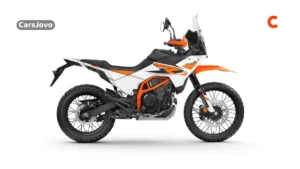
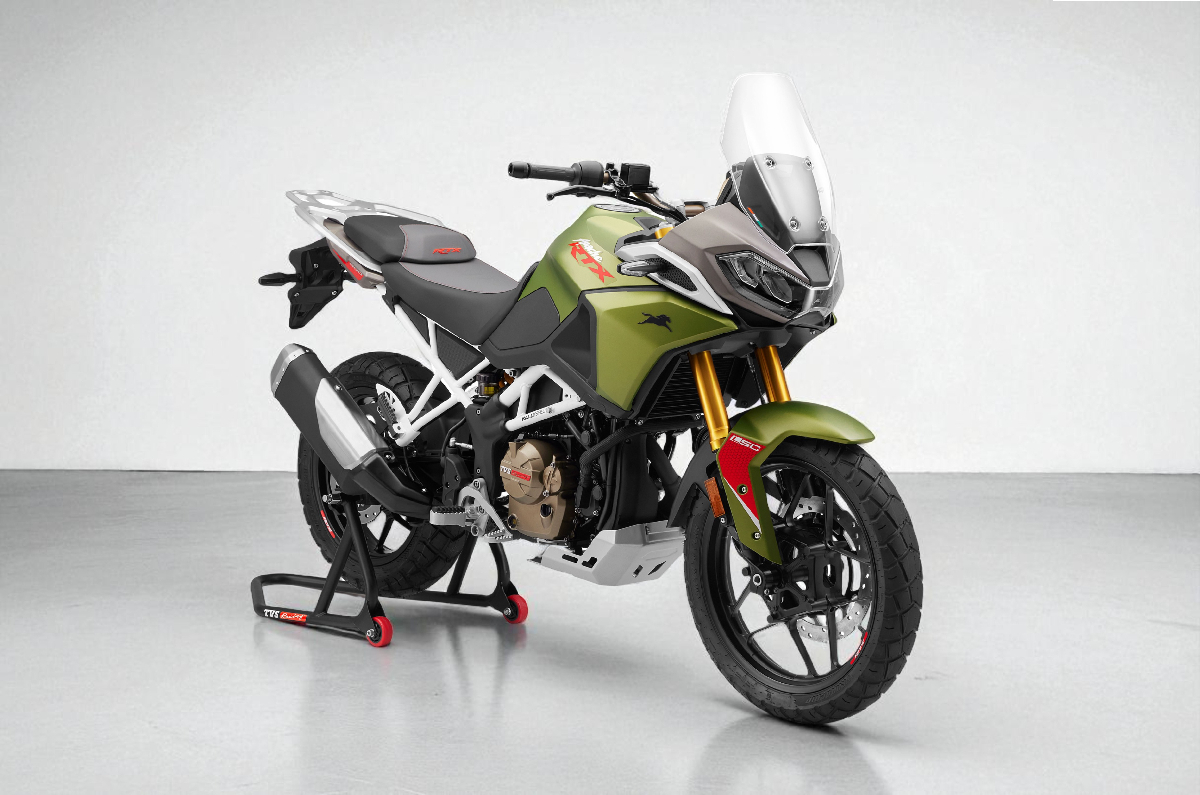
After riding the TVS Apache RTX 300 for over 1,500 kilometers, I finally got the hang of it. This wasn’t a quick speed or first impression ride. We had a long time with the motorcycle.
We used it daily in Mumbai traffic, tackling the city’s broken roads, and then took it on a Mumbai-Goa-Mumbai road trip via NH66, one of India’s most scenic yet demanding highways.
Bad patches, unpredictable surfaces, long hours in the saddle, and real-world speeds, this test covered everything an adventure-tourist can handle.
So now comes the important question: is the TVS Apache RTX 300 really worth your money?
Let’s explain it honestly.
Light Weight & Balance: The RTX’s Biggest Strength
One of the first things you notice about the RTX 300 is how light and well-balanced it feels.
On paper, the motorcycle weighs around 180 kg, which already makes it one of the lighter bikes in its class. But once you get on it, it feels even lighter than the numbers suggest.
Finding the balance point is effortless.
Moving it around in traffic feels natural.
Parking on slopes doesn’t turn into a gym session.
Whether you plan to commute daily or head off on weekend adventures, the RTX feels easy on your body and your mind. That approachability makes it instantly likeable.
Seating Comfort & Ergonomics: Built for Long Days
People buy ADVs mainly for comfort, and TVS clearly understood the assignment.
The 835 mm seat height sits right in the middle, not intimidating, not low. Swinging a leg over may feel slightly awkward because the pillion seat sits higher, but once seated, everything makes sense.
The riding posture feels
- Upright
- Chair-like
- Relaxed
You don’t lean forward.
You don’t stress your back.
You don’t need to engage your core constantly.
The seat is wide and supportive, allowing you to shift around on long rides. Foot pegs sit in a neutral position, neither sporty nor cruiser-like.
During our long Goa tour, fatigue never became an issue, which says a lot.
Standing Ergonomics & Off-Road Position
For riders who enjoy occasional off-road sections, the RTX scores again.
Standing up feels natural.
You can grip the bike using your legs.
You don’t need to pull on the handlebars.
That balance helps on gravel, broken roads, and uneven terrain. TVS clearly paid attention to rider ergonomics here.
Suspension Setup: Impressively Well-Tuned
Suspension quality often separates good ADVs from great ones — and here, the RTX shines.
The motorcycle gets 180 mm of suspension travel at both ends. The BTO variant adds adjustability, which we tested extensively.
Front suspension
- Rebound adjustment
- Compression damping
- No preload
Rear suspension
- Preload
- Rebound damping
We kept the settings right in the middle throughout our city rides and Goa tour — and never felt the need to tweak anything.
The suspension absorbs bumps cleanly, settles quickly, and avoids pogoing or harshness. It feels controlled, planted, and confidence-inspiring.
For the price point, this is among the best suspension setups currently available, even compared to more expensive motorcycles.
Handling & Road Manners: Surprisingly Agile
Despite being a tall ADV with long travel suspension, the RTX handles remarkably well on tarmac.
It runs wider tyres than expected:
- 110-section front
- 150-section rear
Yet, the bike feels light at low speeds and stable at higher ones. Corner entry feels natural, mid-corner stability remains strong, and quick direction changes need very little effort.
The chassis communicates clearly.
Tyre feedback feels predictable.
Confidence builds quickly.
On twisty roads, the RTX feels far more engaging than you’d expect from an adventure tourer.
Braking Performance: Strong & Predictable
Braking performance stands out as another strong point.
Even with a single front disc, lever effort remains low, and feedback feels excellent. Brake progression stays linear, making it easy to modulate, even on slippery surfaces.
The tyres help here too. You always know what the bike is doing, which builds trust.
Engine Performance: A Pleasant Surprise
We were skeptical about the engine, and honestly, for good reason.
The older 310 platform delivered character but also vibrations. Expectations weren’t high from the new 300 cc engine.
Thankfully, the RTX surprised us.
Key figures:
- Around 35 PS of power
- Just under 30 Nm of torque
Low-end performance feels acceptable.
Mid-range pulls strongly.
Top-end doesn’t fade even near 9,000 RPM.
The engine feels happiest in the mid and upper revs. Vibrations exist but stay far more controlled than the 310.
The exhaust note sounds rough, slightly angry , and that actually adds character.
Design & Build Quality: Big Bike Energy
Visually, the RTX punches well above its weight.
Despite being a 300 cc motorcycle, it easily looks like something closer to a 600 cc ADV. From afar and up close, it feels premium.
Panel quality, finish, switchgear, and detailing all feel solid. The bike looks proportionate, muscular, and desirable.
This design alone will pull many buyers into showrooms.
The Negatives You Should Know
No motorcycle is perfect , and the RTX isn’t either.
Vibrations at Higher RPMs
Vibrations start creeping in past 4,500–5,000 RPM.
They remain consistent rather than escalating, but you’ll feel them:
- On the handlebars
- On the seat
- Most noticeably on the foot pegs
During our 8-hour Goa return ride, hand tingling stayed manageable, but foot peg vibrations caused mild numbness over time.
Erratic Fueling (Occasional)
At steady cruising speeds, especially with cruise control, the throttle sometimes fluctuates on its own.
It doesn’t happen often, but when it does, you notice it. This feels more like a calibration issue and may not affect every unit.
Windscreen Buffeting
The fixed windscreen causes significant buffeting above 90 km/h, especially for riders around average Indian height (5’8”).
A simple visor extension solves this, but given the bike’s overall quality, this felt like a missed opportunity.
Top Speed, Fuel Efficiency & Off-Road Performance
Top Speed
- Tested top speed: 141 km/h
- Achieved easily, without stress
- Comfortable cruising:
- 100–110 km/h at ~7,000 RPM
- 125 km/h possible but not ideal long-term
Vibration-free touring feels best around 80–90 km/h.
Fuel Efficiency
- Highway (Goa ride): 28–29 km/l
- City riding: 38–39 km/l
These figures came in Tour mode, riding within the torque curve and short-shifting.
Urban and Rain modes dull the throttle response and feel best avoided.
Off-Road Capability
Despite wide tyres, the RTX feels agile off-road.
It slides predictably, lands jumps cleanly, and stays composed on gravel and broken tracks. Standing ergonomics help immensely, and suspension confidence remains high.
For a touring-focused ADV, off-road ability exceeds expectations.
Verdict: Should You Buy the TVS Apache RTX 300?
Yes, with clarity.
The RTX has quirks:
- Vibrations exist
- Windscreen needs an upgrade
- Fueling could improve
But the positives outweigh the negatives comfortably.
You get:
- Excellent comfort
- Strong suspension
- Confident handling
- Good braking
- Versatile performance
- Big-bike presence
At around ₹2.5 lakh (on-road) for the top variant, it delivers strong value. Skip the base variant. The top model makes the RTX what it is.
If you want an entry-level ADV that you can commute on, tour on, and explore trails with — the TVS Apache RTX 300 deserves serious consideration.