The world of energy storage doesn’t change overnight. Backed by years of research, testing, and validation, real breakthroughs come slowly. That’s why Donut Lab’s latest announcement has everyone in the tech and electric vehicle community surprised.
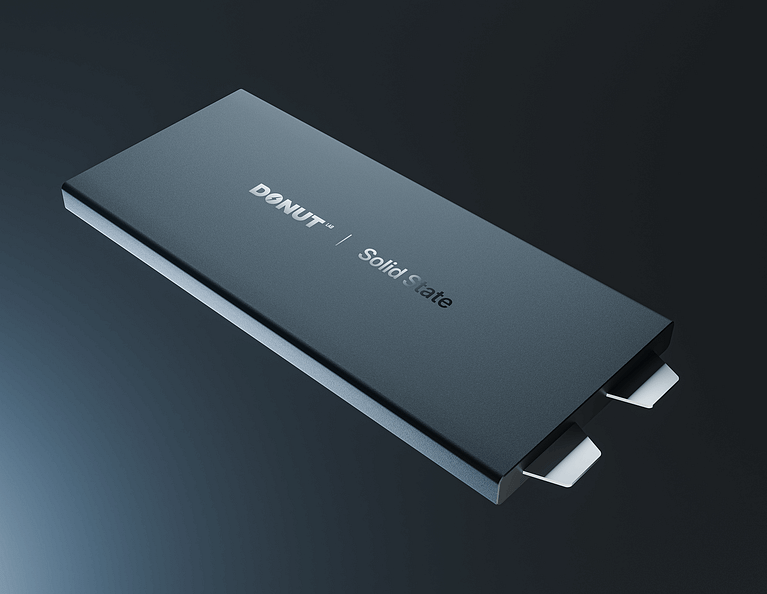
At CES, Donut Lab claimed a solid-state battery is capable of doing what many engineers still believe is impossible. We’re talking ultra-fast charging, extraordinary energy density, and a lifespan that could last longer than the vehicle itself. Naturally, skepticism followed curiosity.
Rather than dismissing the claims or blindly celebrating them, this article takes a grounded, evidence-based look at what was presented, what was observed, and where unanswered questions remain.
Why This Battery Announcement Matters
If the claims are accurate, this technology could redefine energy storage across industries.
According to Donut Lab, their solid-state battery promises:
- Energy density of 400 Wh/kg
- 5-minute charging time
- 100,000 charge cycles
- Operation from -30°C to 100°C
- Use of non-toxic, abundant materials
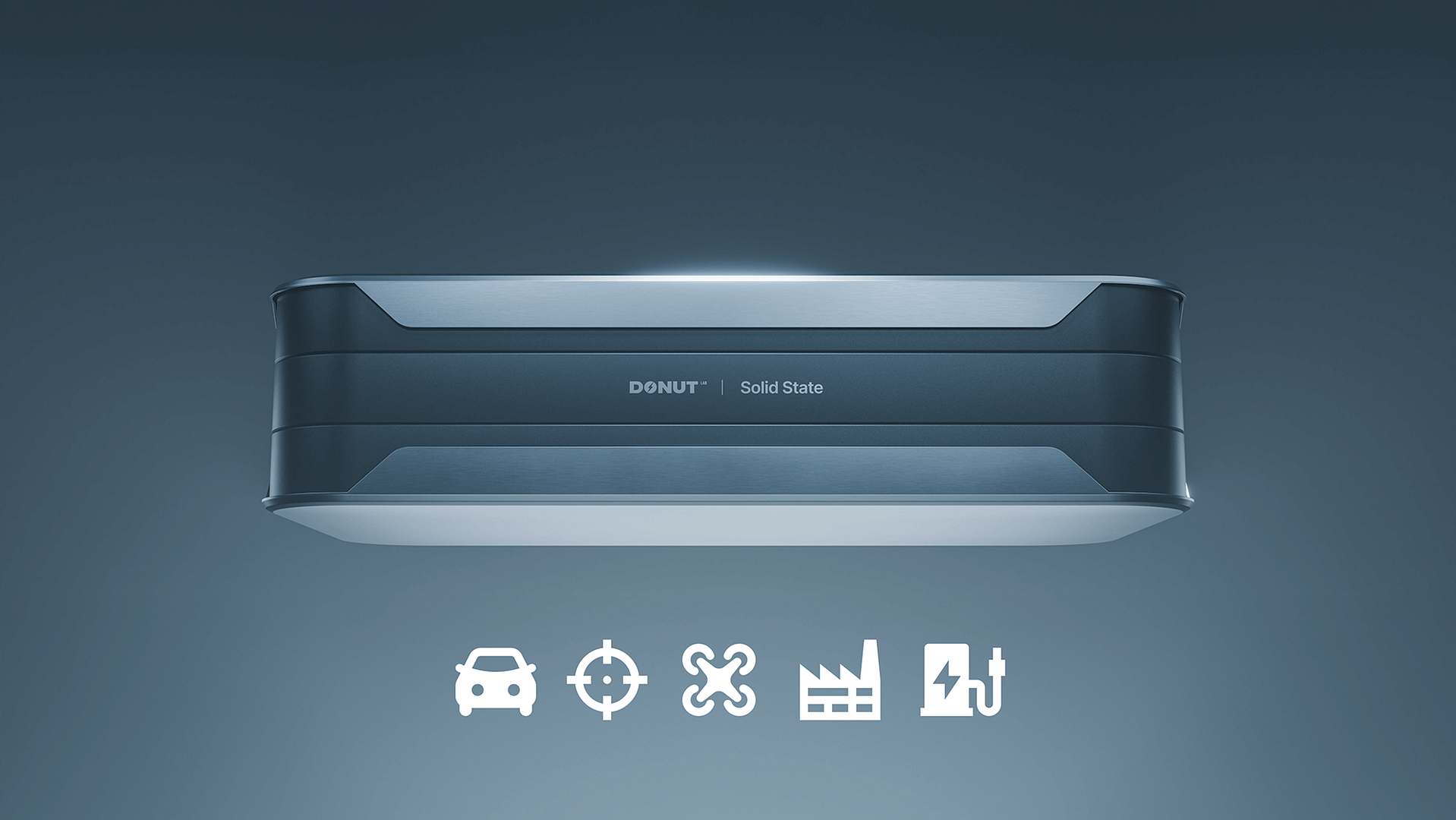
Simply put, that would mean electric vehicles with longer ranges than combustion cars, batteries that last for decades, and charging times that are shorter than a coffee break. This combination explains why their booth received nearly 600 inquiries on the first day alone.
Extraordinary claims, however, demand extraordinary scrutiny.
What makes solid-state batteries different?
Traditional lithium-ion batteries rely on a liquid electrolyte. Solid-state batteries replace this liquid with a solid electrolyte, which changes everything.
This solid-state battery design allows for:
- Higher energy density
- Improved safety
- Reduced risk of internal short circuits
The solid electrolyte inhibits the growth of dendrites, the needle-like structures that form on the lithium metal anode and cause battery failure. That improvement alone explains why solid-state batteries have attracted global research attention for years.
Early versions already exist, but they generally perform slightly better than traditional lithium-ion batteries. That makes the Donut Lab figures seem almost unrealistic.
First impressions at the Donut Lab booth
Walking up to the Donut Lab stand, one detail was immediately clear.
The cells and modules on display were 3D-printed mock-ups, not functional units. Most battery companies show real cells, even if they can’t be handled. Here, verification is made difficult from the start.
Company representatives remained polite but extremely cautious. They declined to discuss:
- Manufacturing methods
- Cell chemistry
Unfortunately, those two topics define whether a battery can scale or survive outside the lab.
Shape-shifting battery claim
Donut Lab confirmed that their current cell format is a pouch cell, chosen solely for ease of manufacturing. Technically, they claimed that the battery could take any shape.
They pointed to the drone on display and suggested that its entire body could act as a battery, even if the shape remained irregular. One representative went further and said that the battery could be made into something as complex as a snowflake.
Why Battery Shape Matters More Than You Think
Most modern battery cells use a jelly-roll design, where the electrodes are rolled up like a Swiss roll. This design works well for mass production but struggles with solid electrolytes.
Solid electrolytes don’t bend easily. Ceramics crack under stress. That limitation makes jelly-roll manufacturing extremely difficult for true solid-state batteries.
The ability to make batteries in arbitrary shapes strongly suggests an alternative process, most likely:
- Layer stacking
- Press-based assembly
This manufacturing method aligns with thin-film or printed energy storage technologies rather than traditional batteries.
Production Scale: Ambitious or Unrealistic ?
Donut Lab has laid out a bold production roadmap.
- 2026: 1 GWh capacity
- 2027: Up to 10 GWh capacity
For reference, Tesla’s Berlin Gigafactory aims to operate in roughly the same location. Achieving this scale will require flawless execution, funding, and supply chain.
They also describe a modular production approach, which allows for multiple smaller facilities instead of one giant Gigafactory. This strategy reduces initial costs but poses new challenges around quality control and consistency.
Their first production facility is said to be located in Finland, which has since become very important.
Charging Test Data Examination
A video displayed at the booth showed what Donut Lab claimed was actual test data.
Key observations included:
- Charging at 4 volts and 270 amps
- Input power just over 1 kW
- Charging from 5% to 80% state of charge
- Constant current and constant voltage throughout the charge
Based on the 125 Wh capacity of the cell, the implied C-rate was between 8C and 12C, which was consistent with a 5-minute charge.
However, this also raises a bigger question.
Why the Charging Curve Looks Unusual
In conventional batteries, current tapers off as the battery approaches higher states of charge. Maintaining constant current and voltage across such a wide charging window contradicts standard lithium-ion behavior.
This does not automatically disprove the claims, but it does demand explanation. No clear answers were provided at the booth.
That mystery deepened when the charging voltage peaked at 4.2 volts, a value strongly associated with lithium-based chemistries.
Lithium Paradox
The 4.2-volt ceiling almost always refers to lithium electrochemistry. That voltage stems from the fundamental electrochemical properties of lithium.
When questioned directly, Donut Lab representatives stated that there was no lithium in the system.
Instead, they explained that the voltage was intentionally chosen so that the cells could be drop-in replacements for existing battery systems. They also suggested that the voltage could be tuned to different values if needed.
Is this even a battery?
At this point, many facts are in agreement:
- No lithium
- Arbitrary cell shape
- Stack-and-press manufacturing
- Extreme cycle life
- Ultra-fast charging
These features make them sound like capacitors, not traditional batteries.
More specifically, they sound like electrostatic or bipolar capacitors, which store energy in a different way than chemical batteries. Capacitors charge quickly and last almost forever, but they typically suffer from very low energy density.
That trade-off is what makes Donut Lab’s 400 Wh/kg claim so hard to accept.
Finland Connection and Nordic Nano
The Finnish manufacturing location has led to an interesting discovery.
Donut Lab has reportedly invested in a Finnish company called Nordic Nano, founded in early 2024. Nordic Nano describes itself as a renewable energy company that specializes in:
- Nanotechnology
- Thin-film energy storage
- Screen-printing techniques
Public documents and pitch decks from Nordic Nano mention:
- Moldable solar films
- Printable energy storage
- Extreme temperature operation
- Non-toxic materials
One slide describes a bipolar electrostatic capacitor with:
- Up to 400 Wh/kg
- Over 50,000 charge cycles
Where the Theory Fits – and Breaks
If Donut Lab is using advanced nanotechnology to create stacked, printed electrostatic capacitors, several claims suddenly make sense:
- Fast charging
- Long lifespan
- Shape flexibility
- Safety
What is not yet understood is energy density.
Current state-of-the-art capacitors fall far short of these figures, and many are far from commercial readiness. Achieving battery-level energy density with capacitor-like behavior represents a historic leap forward.
Possible? Maybe. Proven? Not yet.
Human Factors and Industry Impact
It is important to note that Donut Labs is staffed by respected engineers, including former colleagues and researchers. These individuals would not knowingly support fraudulent technology.
However, history shows that companies can be misled by suppliers, misinterpret test data, or be misled by overly optimistic projections.
Claims of this scale have consequences. Investors pressure other startups to match impossible benchmarks. When promises are broken, the entire ecosystem feels the ripple effect.
This reality calls for caution, not hype.
Sources & References :
CES public booth data (Donut Lab), General solid-state battery principles